Every year, humpback whales travel along Australia's coastline between their feeding grounds in Antarctic waters and warmer breeding waters in the north. Whale watching tours give you a chance to see them breach, slap their tails and swim alongside their calves. This guide explains when to go, how to choose a tour and the approach rules that protect whales. It uses New South Wales rules as the main example; other states and territories have their own similar rules.
100 m
Minimum vessel distance
From a whale in NSW
300 m
Caution zone
Around whales in NSW
May–Nov
Migration season
Roughly, on the NSW coast
When to go
On the east coast, NSW Environment and Heritage says humpback whales migrate roughly between May and November. They travel north in the cooler months and return south with their calves later in the season. Exact timing varies along the coast and from year to year. On the west and south coasts, seasons differ; local operators and park agencies publish the best times.
Southern right whales visit southern Australian waters in winter and spring, often coming close to shore in sheltered bays. Other species, such as minke and blue whales, are also seen in some areas.
Choosing a whale watching tour
Whale watching tours range from large catamarans to small fast boats and sailing vessels. Consider:
- Boat size. Larger boats are more stable and comfortable, with indoor areas, toilets and food. Smaller boats can feel more intimate but move more in the swell.
- Tour length. Trips commonly run for a few hours. Longer trips may travel further offshore.
- Commentary. A knowledgeable guide makes the experience much richer.
- Sighting policy. Whales are wild and sightings can't be guaranteed. Some operators offer another trip if you don't see any; check the terms.
- Accessibility. If you have mobility needs, ask about boarding, seating and toilets.
Our tour value comparer can help you weigh price against time on the water.
Approach distances in NSW
NSW Environment and Heritage sets approach distances for marine mammals. For vessels, the main rules are:
- don't go closer than 100 m to a whale, or 50 m to a dolphin or dugong;
- within a caution zone of 300 m around whales (and 150 m around dolphins and dugongs), move slowly and don't make sudden changes in speed or direction;
- don't enter the caution zone if a calf is present;
- no more than three vessels in the caution zone at once.
Some craft have larger distances. Personal motorised watercraft, such as jet skis, must stay 300 m away. Special rules apply to some animals, such as 500 m for white whales. Rules can be updated, and temporary rules sometimes apply to particular species, so check the current guidance.
Licensed whale watching operators know these rules. Whales sometimes approach boats themselves; in that case, the vessel should stop or move away slowly.
Swimming near whales
In NSW, you must not enter the water closer than 100 m to a whale, and you must stay at least 30 m away while in the water. Approaching whales in the water can be dangerous, as they are large and can move suddenly. Swim-with-whale tours operate only where specific permits allow.
Drones
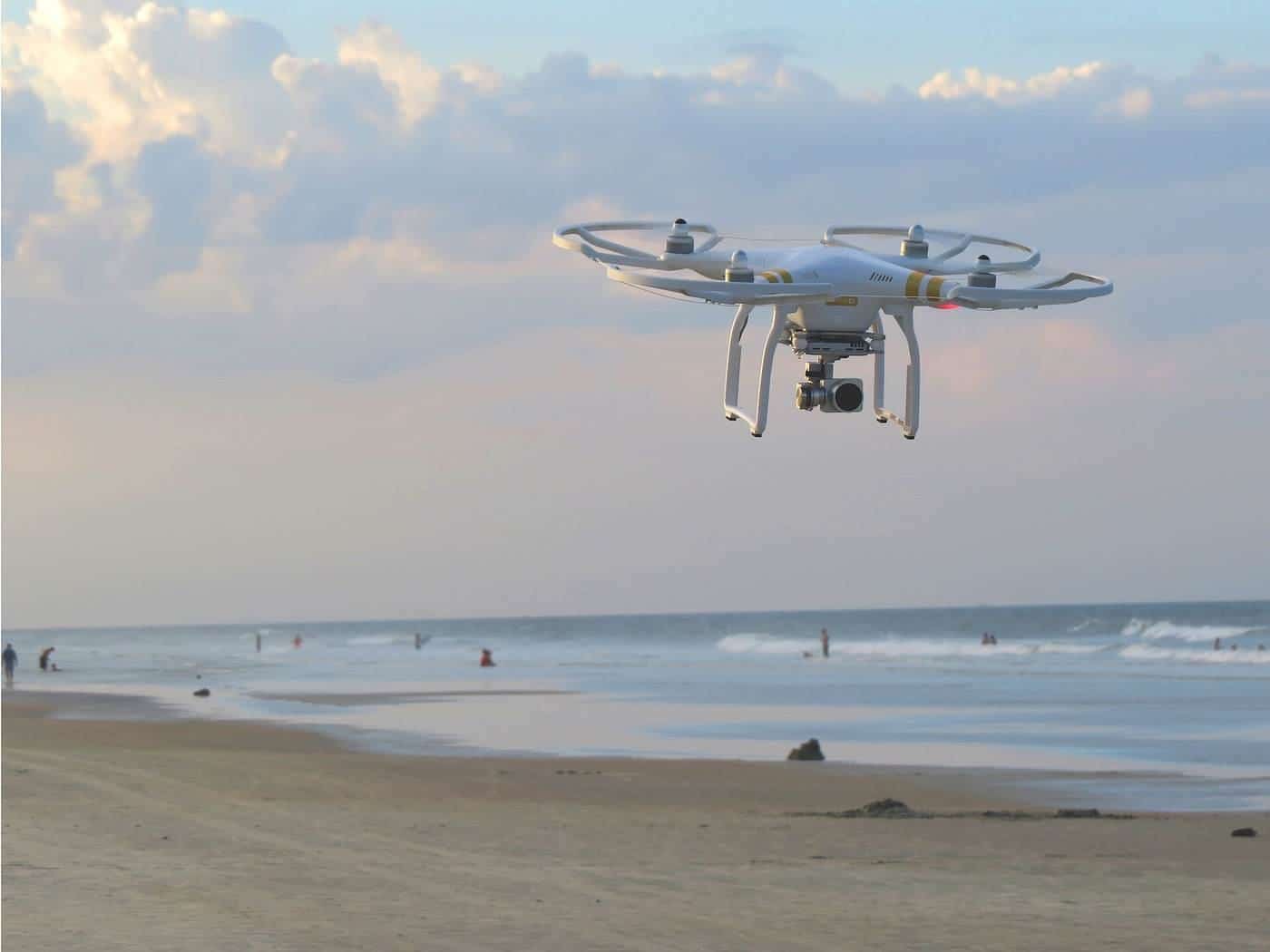
Drones are popular for capturing whales from above, but they can disturb animals. In NSW, drones must stay at least 100 m from whales. The Civil Aviation Safety Authority (CASA) also has drone rules, including keeping your drone within visual line of sight and at least 30 m from people. See our guide to flying a drone on holiday.
Watching from land
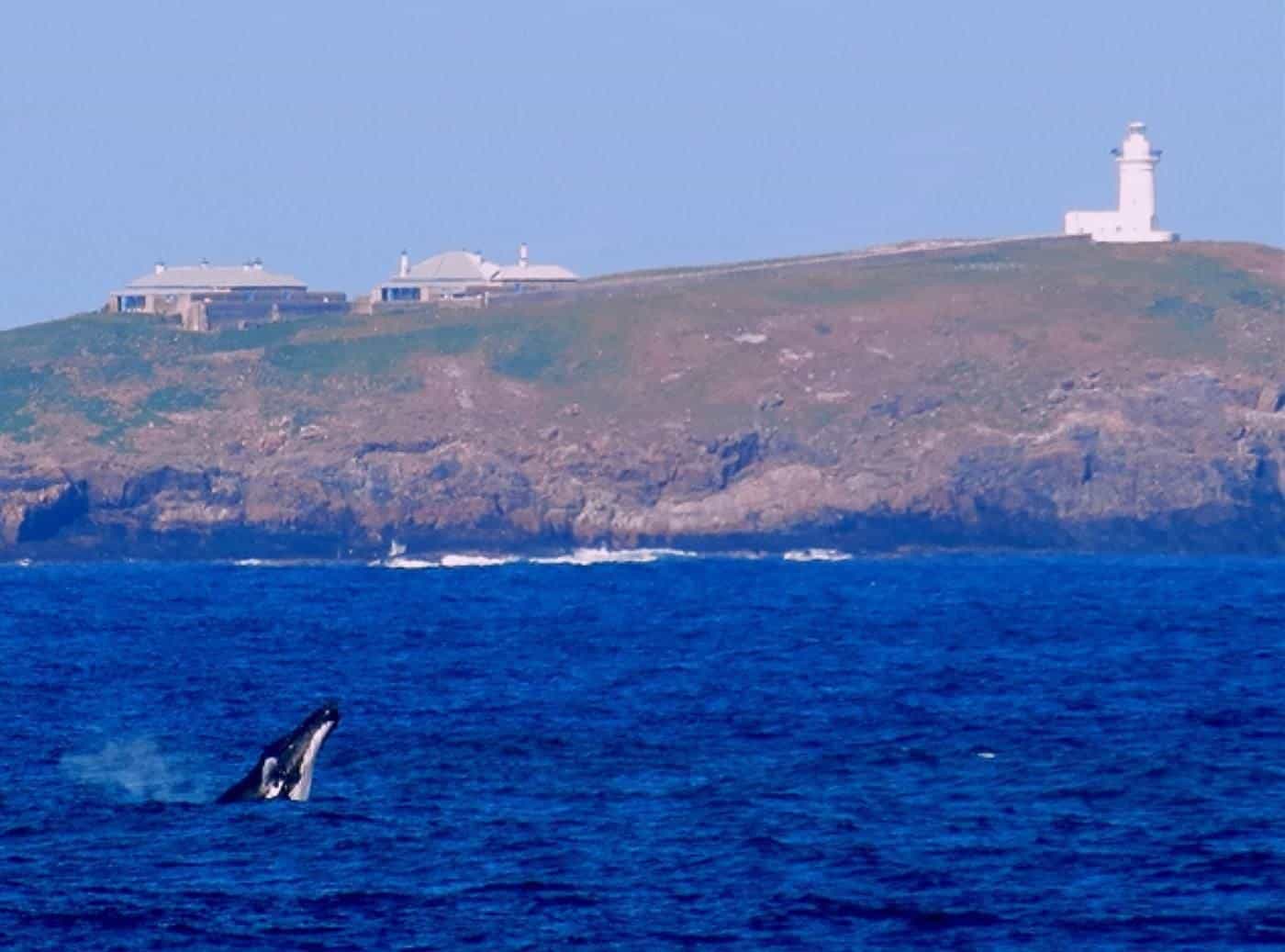
You don't need a boat to see whales. Headlands along much of the east and south coasts are excellent vantage points during the migration. NSW National Parks and Wildlife Service publishes whale watching tips and suggests good lookouts. Bring binoculars, a hat and patience. Look for blows, splashes and tail slaps, often far offshore.
Seasickness
Whale watching boats often go out into open ocean swell. If you're prone to seasickness:
- choose a larger boat;
- take a seasickness remedy before you leave, as directed by a pharmacist;
- stay on deck in the fresh air and look at the horizon;
- avoid heavy meals and alcohol before the trip.
What to bring
- Warm, windproof clothing, even on sunny days
- SPF50+ sunscreen, a hat and sunglasses
- A camera with a zoom lens and a strap
- Binoculars
- Water and snacks
- Seasickness remedies if needed
Photography tips
- Use a fast shutter speed to freeze breaches and splashes.
- Keep your camera ready, as behaviour can happen without warning.
- Watch for blows and follow the whale's direction of travel.
- Don't forget to put the camera down and simply watch.
Weather and cancellations
Rough seas and strong winds can cancel whale watching trips. Check the operator's weather policy and booking terms. According to the ACCC, consumer guarantees apply to tours, but if you change your mind or miss the tour, you aren't entitled to a refund under those guarantees. See our guide to bookings, cancellations and refunds.
Understanding whale behaviour
Knowing what you're looking at makes a tour more rewarding. Guides often point out:
- Blows, the spout of air and water vapour when a whale exhales, often the first sign that whales are nearby;
- Breaching, when a whale launches much of its body out of the water and crashes back down;
- Tail slapping and fin slapping, when whales strike the surface with their tail or long pectoral fins;
- Spy hopping, when a whale raises its head vertically out of the water, apparently to look around;
- Logging, when whales rest motionless at the surface.
Mothers and calves often travel slowly and close to the coast, which is why rules about calves are stricter. Watching quietly from a respectful distance lets whales behave naturally, and often results in better sightings than chasing them.
Dolphins, seals and seabirds
Whale watching trips often bring other wildlife encounters, such as pods of dolphins riding the bow wave, seals resting on rocks and seabirds following the boat. In NSW, the approach rules for dolphins and dugongs are a minimum of 50 m for vessels and a caution zone of 150 m. Other states set their own rules for seals and other animals. Ask your guide what you might see on the day.
Responsible whale watching
Choose operators who follow the approach rules, keep commentary focused on the animals and talk about conservation. Avoid tours that promise close encounters or encourage passengers to make noise to attract whales. Take rubbish back to shore, and never throw food or anything else overboard. If you see a whale entangled in fishing gear or stranded, report it to the local wildlife authority rather than trying to help yourself.
Key points
- On the east coast, humpbacks migrate roughly from May to November.
- In NSW, vessels must stay at least 100 m from whales, with a 300 m caution zone.
- Don't enter the caution zone if a calf is present.
- In the water, don't enter closer than 100 m and stay at least 30 m away.
- Drones must stay at least 100 m from whales in NSW, and CASA rules apply.
Frequently asked questions
When is whale watching season?
On the east coast, humpback whales migrate roughly between May and November, according to NSW Environment and Heritage. Timing varies along the coast.
How close can boats get to whales?
In NSW, vessels must stay at least 100 m from a whale, with a caution zone of 300 m. Different rules apply to calves, some species and other states.
Are whale sightings guaranteed?
No. Whales are wild animals. Some operators offer another trip if you don’t see any, so check the terms before you book.
Can I swim with whales?
Only where it’s permitted and under strict rules. In NSW, you must not enter the water closer than 100 m to a whale and must stay at least 30 m away.
Can I fly a drone near whales?
In NSW, drones must stay at least 100 m from whales. CASA’s drone rules also apply.
Sources and further reading
Facts on this page were checked against these primary and official sources. Conditions change — confirm before you travel or buy.
- Approach distances for whales, dolphins and dugongs — NSW Environment and Heritage
- Whale watching tips and guidelines — NSW National Parks and Wildlife Service
- Drone rules — Civil Aviation Safety Authority
- Travel delays and cancellations — ACCC